Quantitative Bitcoin allocation framework for long-term investors.
Azimuth BTC Strategy is a systematic investment framework designed to dynamically manage Bitcoin exposure across changing market environments.
The model adjusts portfolio allocation based on a quantitative combination of market signals, macro indicators and risk controls.
Instead of maintaining constant exposure, the strategy increases participation during favorable regimes and reduces risk during adverse market phases.
The objective is to capture Bitcoin’s long-term structural growth while mitigating the impact of major drawdowns.
A TradingView reference page illustrating the signal component of the Azimuth BTC Strategy can be viewed below.
The strategy is based on a rule-driven quantitative framework designed to dynamically adjust Bitcoin exposure across different market environments.
Instead of maintaining constant exposure, the model evaluates market signals and risk conditions to determine the appropriate allocation level.
Bitcoin markets exhibit large regime shifts and periods of extreme volatility. Static exposure can therefore lead to significant drawdowns during adverse market phases.
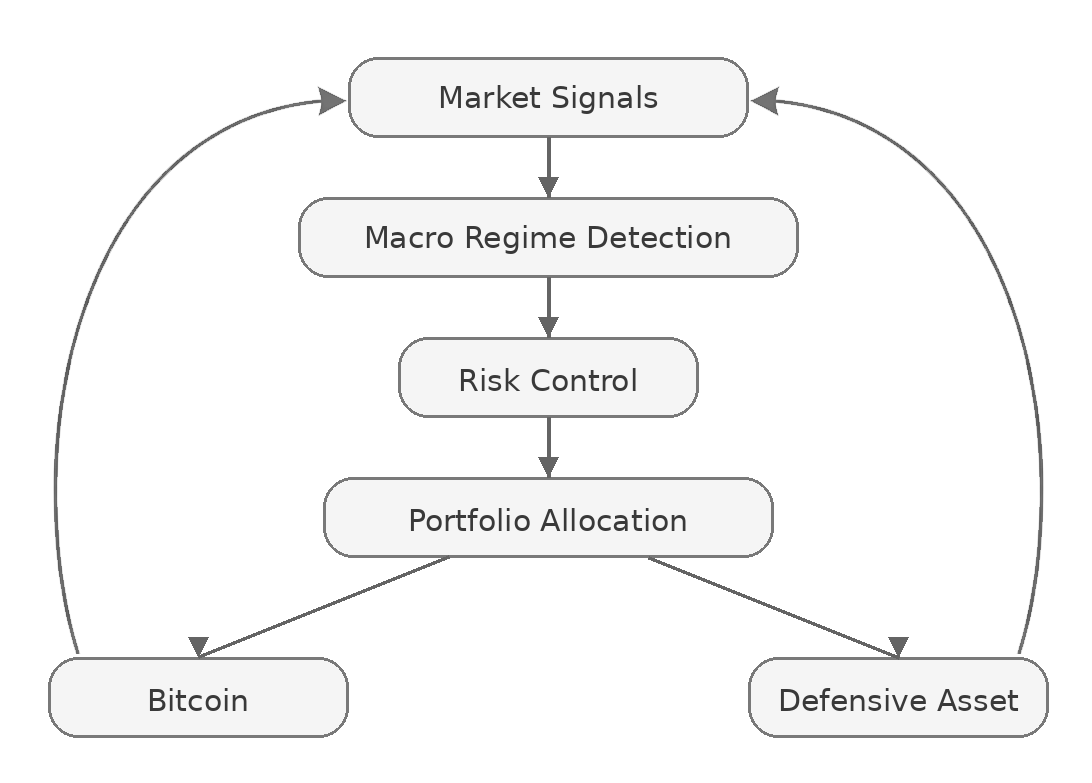
A systematic allocation framework allows exposure to adapt dynamically, increasing Bitcoin participation during favorable regimes while shifting capital toward a defensive asset during periods of elevated risk.

Rules-based allocation model driven by quantitative signals designed to evaluate changing market regimes.
Allocation changes occur only when quantitative signals indicate a change in market regime.
Capital not allocated to Bitcoin is shifted to a defensive reserve asset during adverse environments.
The strategy avoids frequent trading and adjusts exposure only when market conditions justify a change.
Designed for investors seeking disciplined Bitcoin exposure with a long-term perspective.
Exposure is reduced during unfavorable market regimes to mitigate major drawdowns.
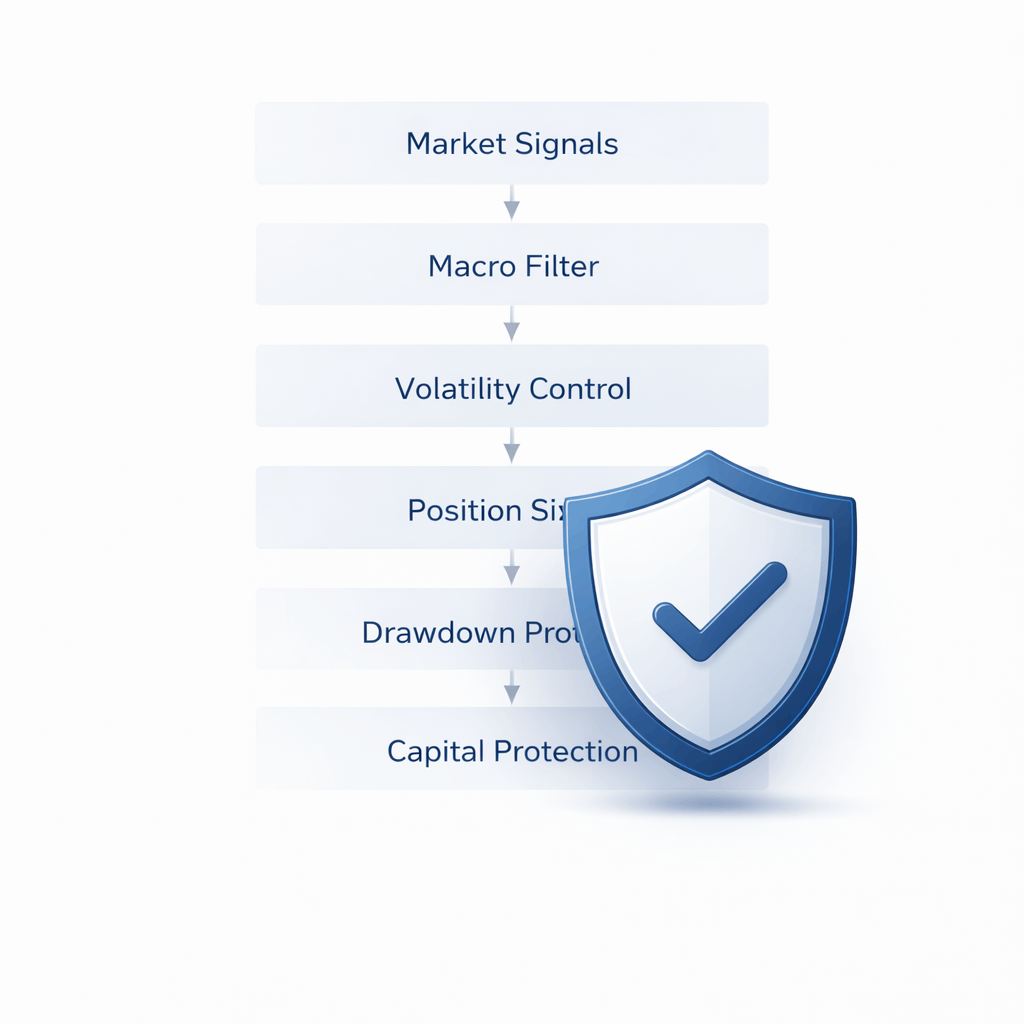
The strategy incorporates a layered risk control architecture designed to manage exposure across different market environments
Macro Market Filters
Regime Detection
Volatility Risk Budgeting
Dynamic Position Sizing
Drawdown Protection
Portfolio Exposure Limits
Bitcoin represents the core growth asset of the strategy and the primary source of long-term return potential.
During adverse market regimes, capital may be temporarily allocated to a defensive reserve asset in order to preserve capital and reduce portfolio volatility.
Allocation changes occur only when the quantitative model detects a meaningful shift in market conditions.
As a result, portfolio adjustments are relatively infrequent and designed to capture medium- to long-term market regimes rather than short-term price movements.
Investors can follow the strategy through systematic signal delivery or automated portfolio replication depending on their preferred implementation method.