
Azimuth BTC Strategy
Executive Summary (Net Base Case)
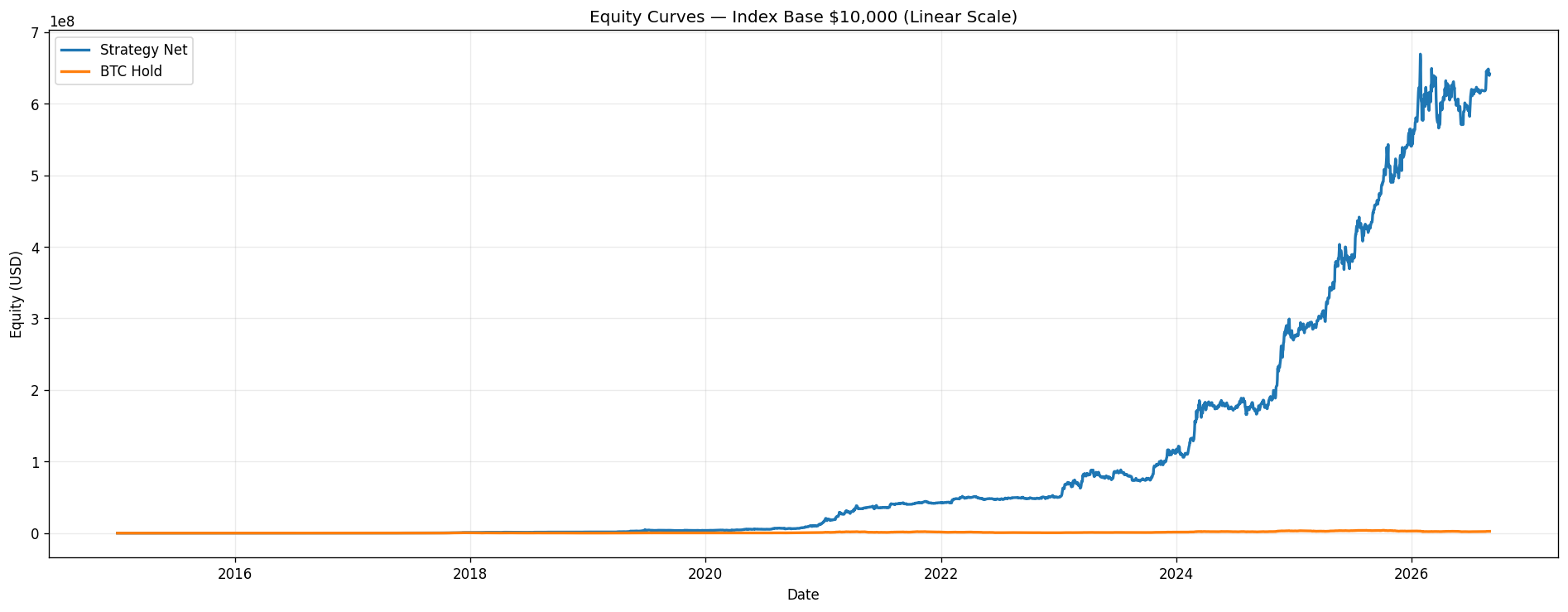
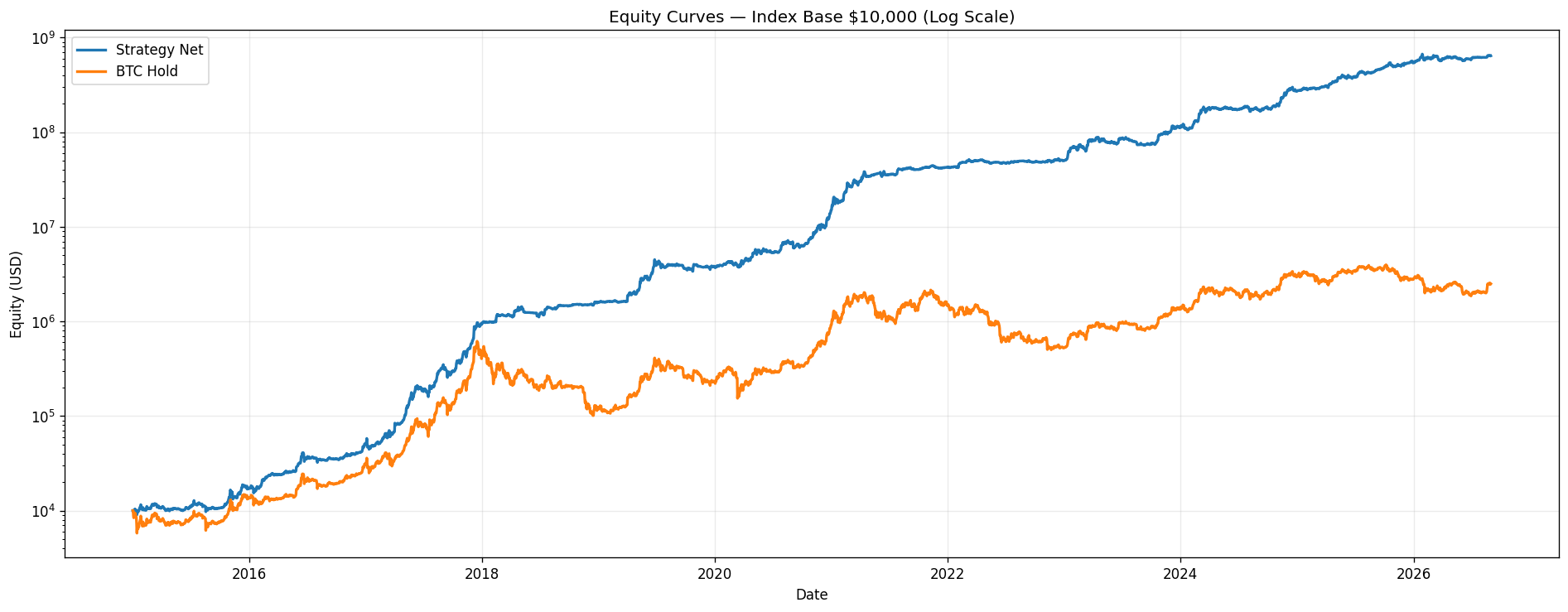
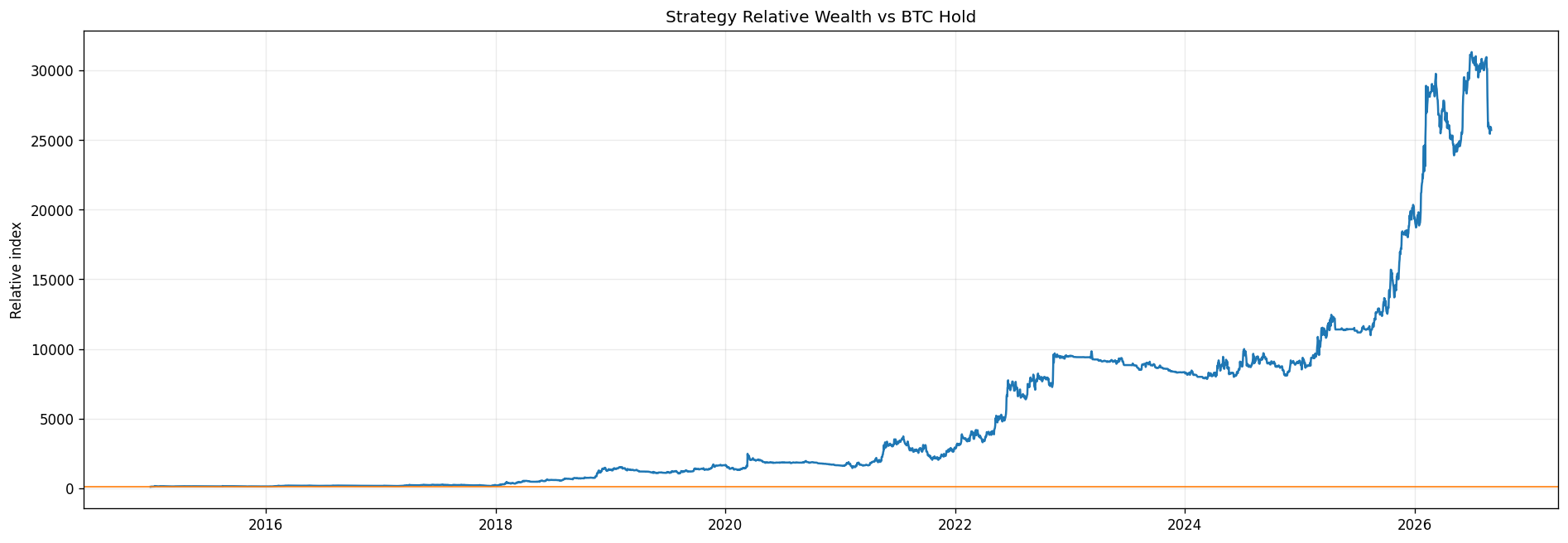
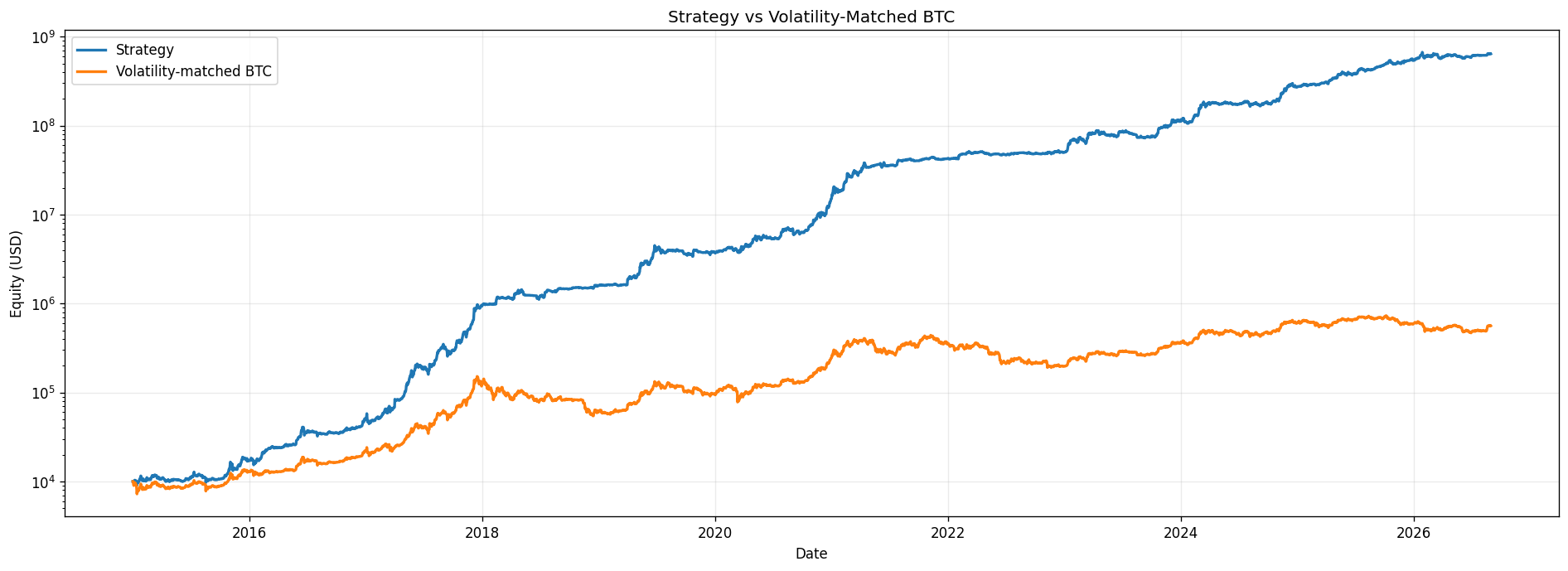
Equity Curve (Net Base Case)
Data & Methodology
Execution Model: The base model assumes a fully funded spot implementation with no leverage or margin borrowing. The complete instrument set, allocation limits, transition rules and internal safeguards are proprietary and are intentionally omitted from the public factsheet.
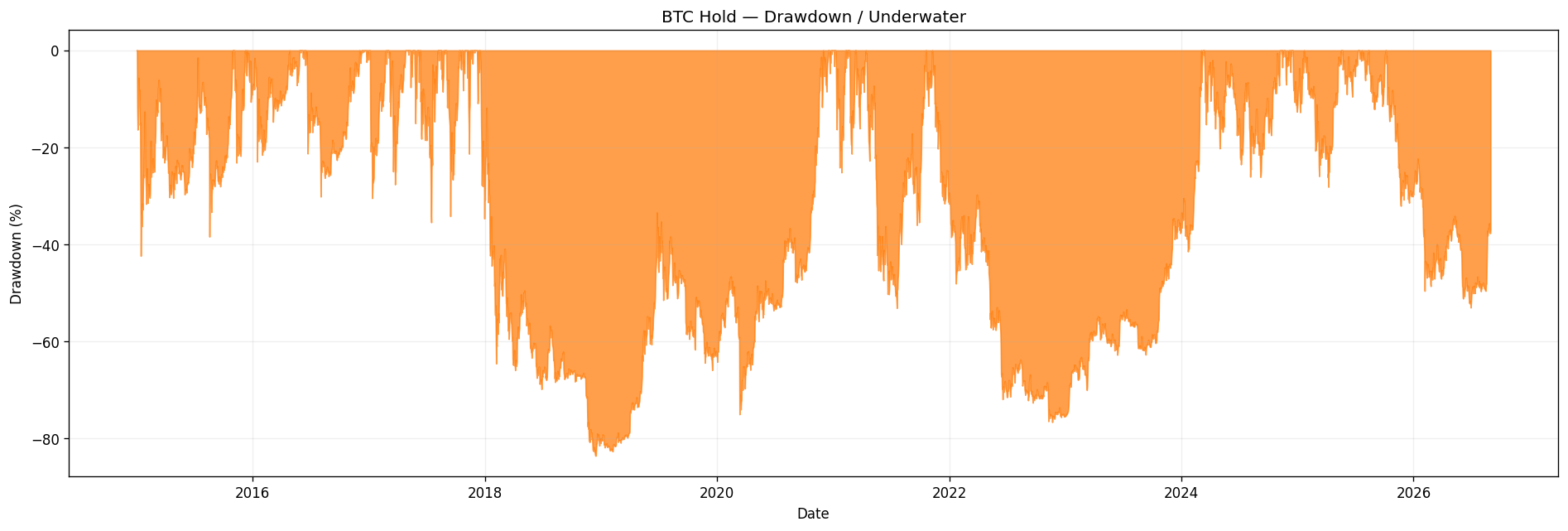
BTC Benchmark: BTC benchmark represents a buy-and-hold spot BTC position normalized to the same initial capital as the strategy, with no trading costs applied.
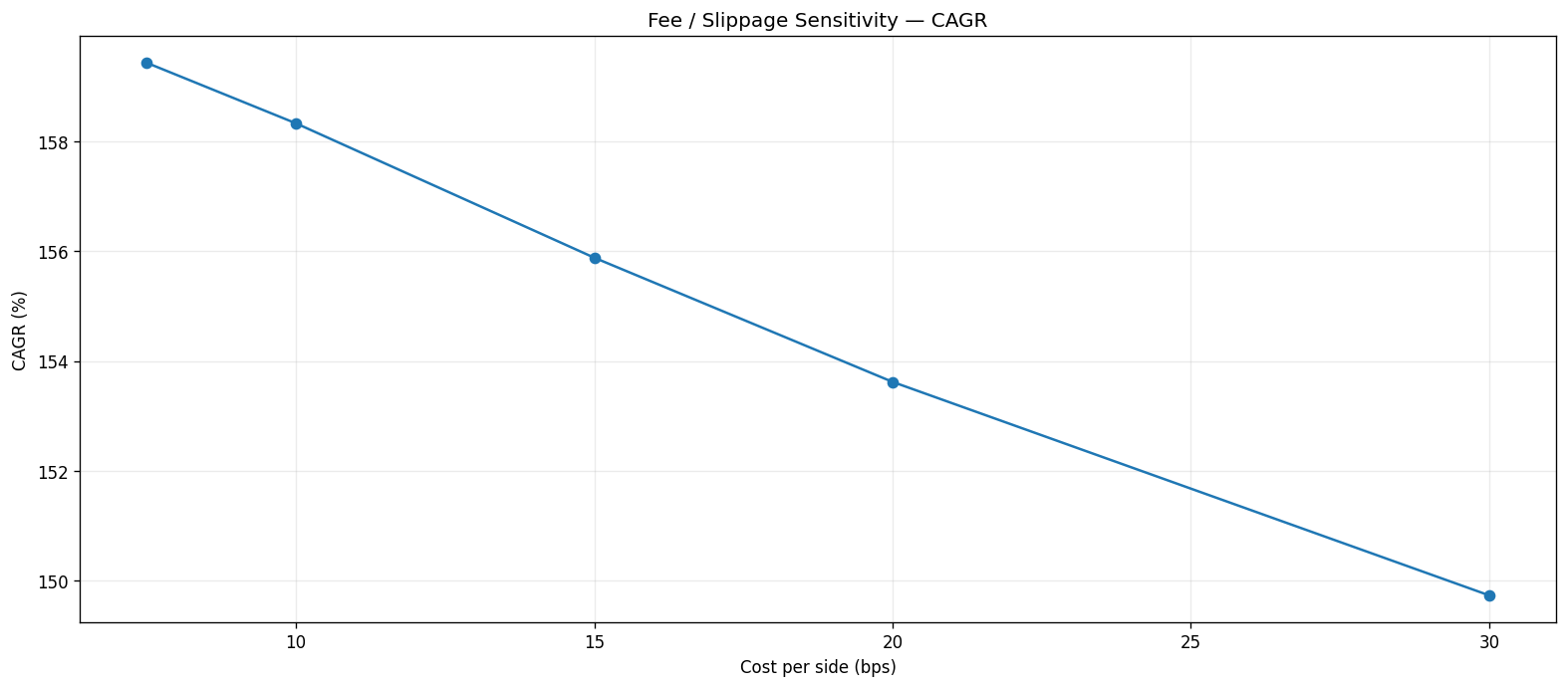
Turnover Measure: Spread and slippage stress tests use a consistent modeled portfolio-turnover reference. The exact allocation series and internal portfolio construction fields are not disclosed publicly.
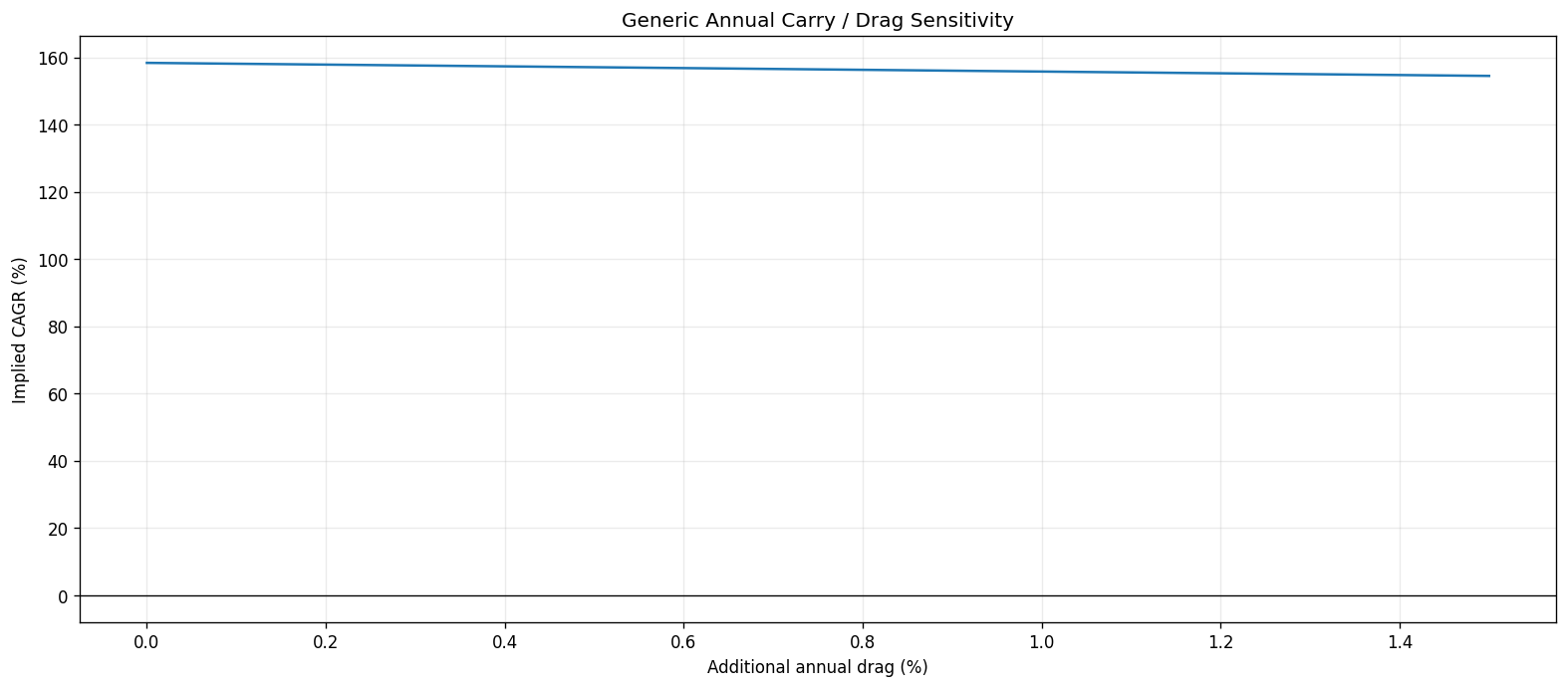
Carry Assumptions: Additional carry scenarios are shown only as generic implementation-cost diagnostics. They are not part of the public base implementation, which is fully funded and spot-only.
Key Metrics (Strategy vs BTC Hold)
Daily Tail Risk: VaR & Expected Shortfall
| Series / Method | Daily VaR 95% | Expected Shortfall 95% | Worst Observed Day |
|---|---|---|---|
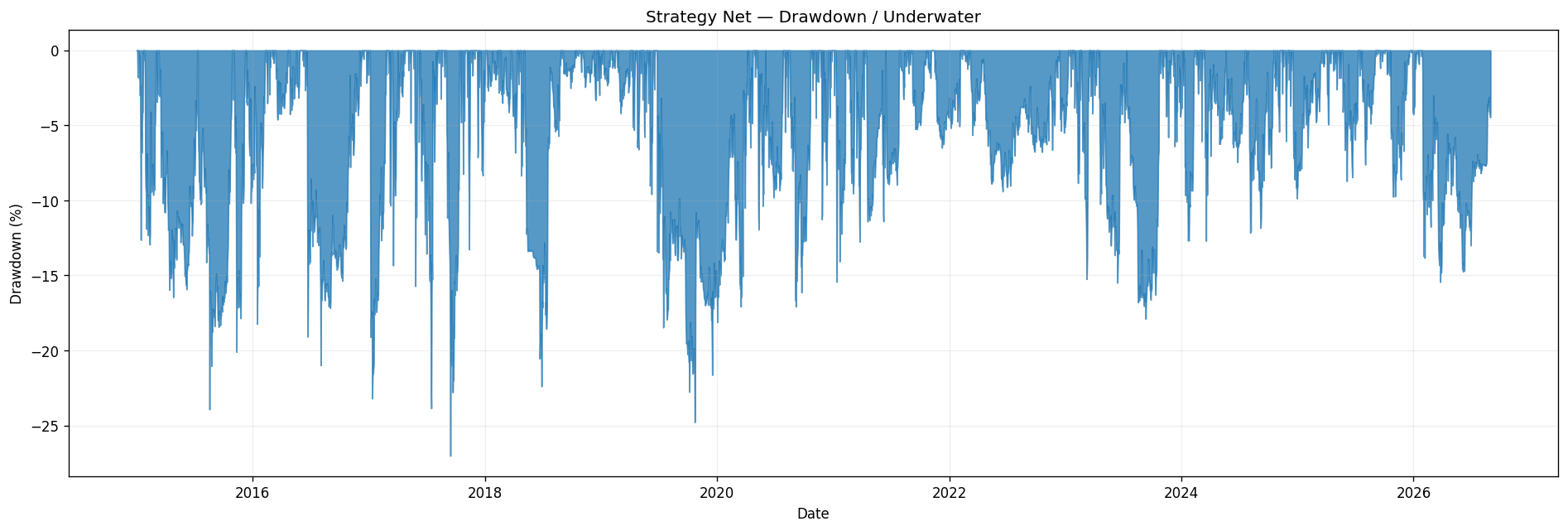
| Strategy Net — historical | -2.60% | -4.51% | -13.41% |
| Strategy Net — parametric approximation | -3.57% | -4.47% | Not applicable |
| BTC Hold — historical | -5.36% | -8.28% | -38.97% |
| BTC Hold — parametric approximation | -5.82% | -7.30% | Not applicable |
Implementation Scenarios & Generic Carry Stress
Out-of-Sample Validation (Time-Based Holdout)
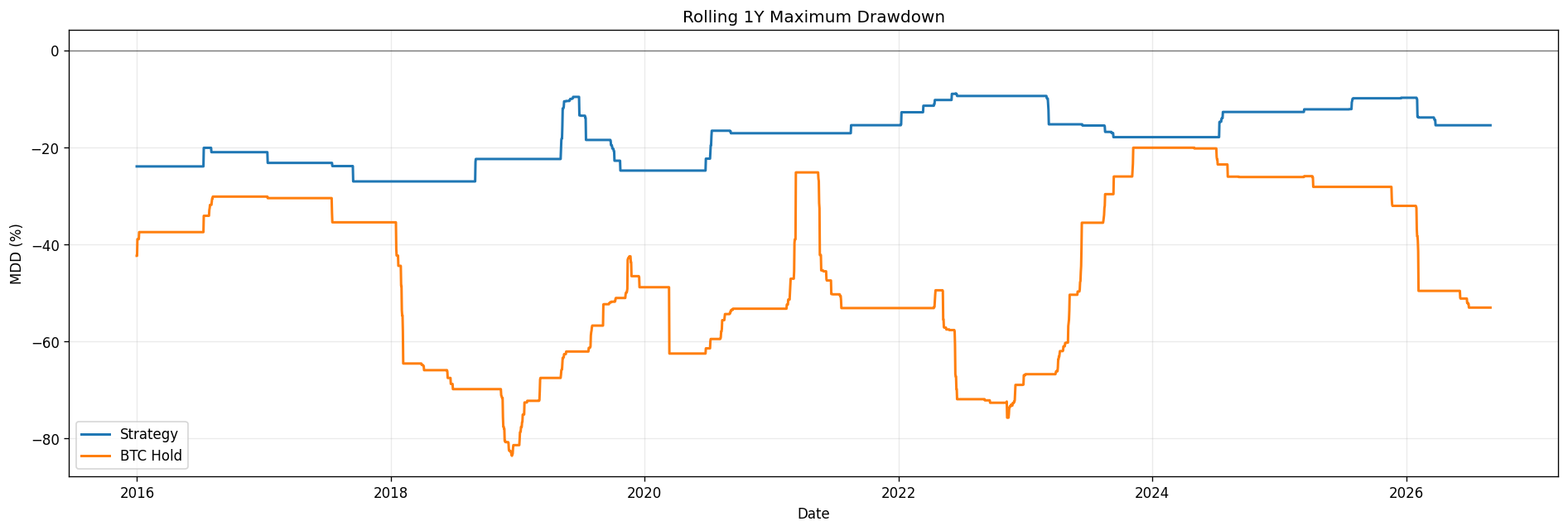
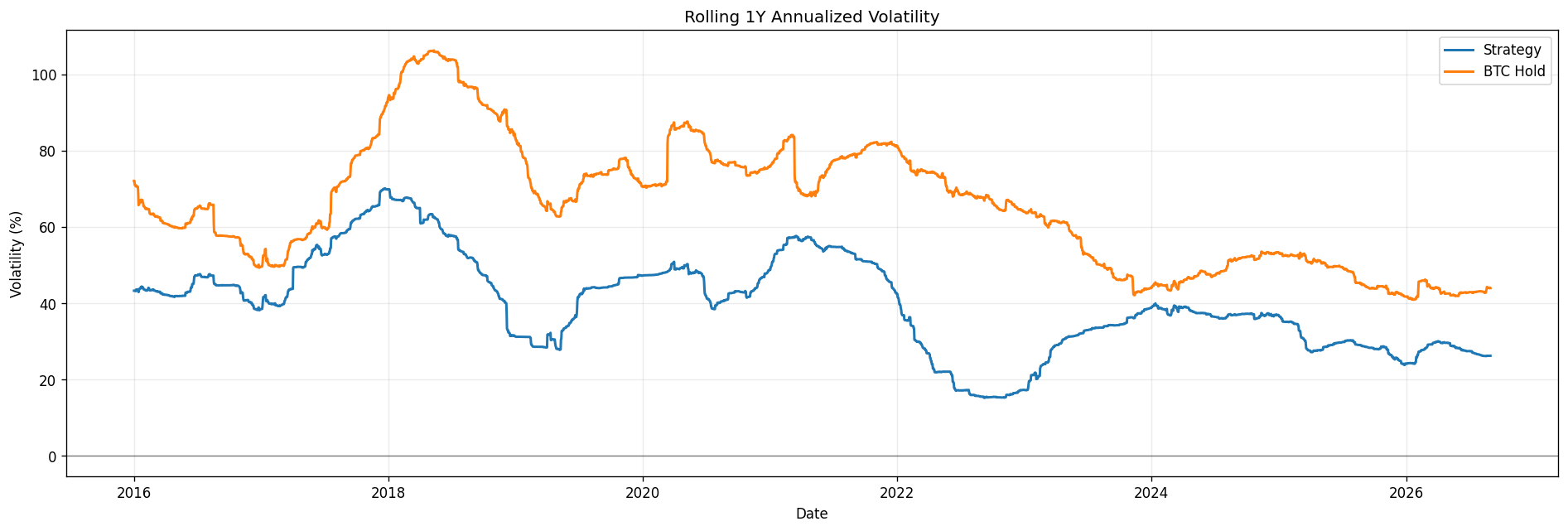
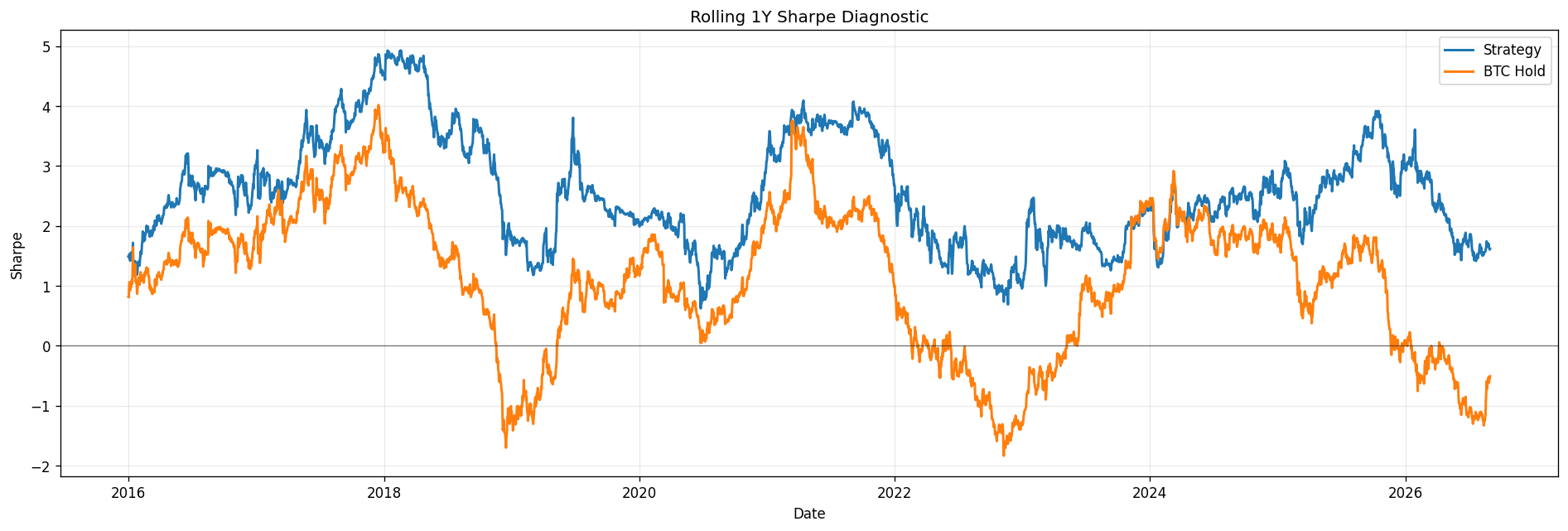
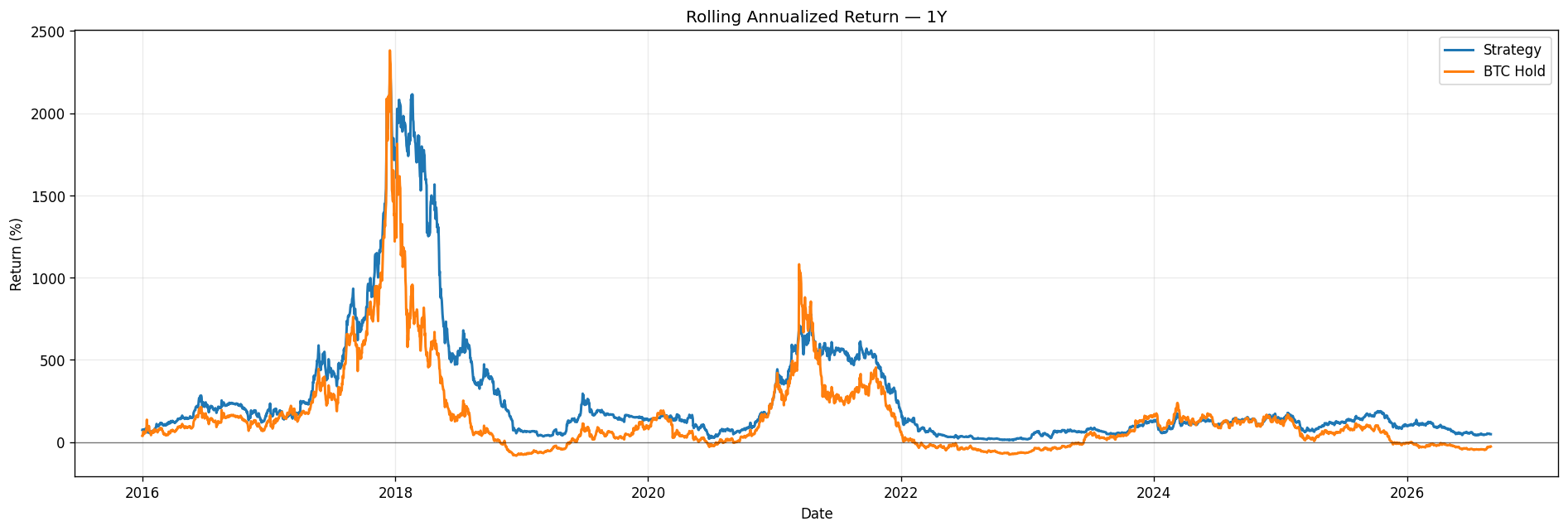
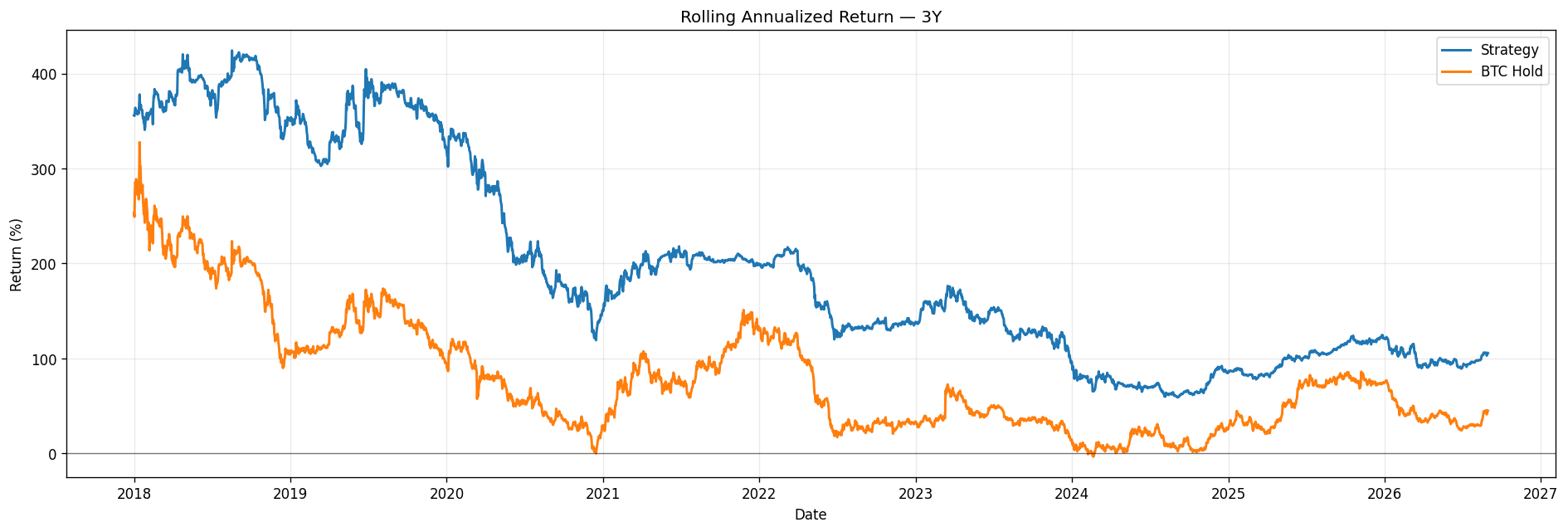
Rolling Stability (1Y)
Rolling-window summary
| Window | Worst | Median | Mean | Positive windows |
|---|---|---|---|---|
| 6M | -20.84% | 45.19% | 80.45% | 94.9% |
| 1Y | 10.34% | 128.23% | 251.29% | 100.0% |
| 2Y | 68.79% | 489.56% | 1069.95% | 100.0% |
| 3Y | 290.49% | 1526.45% | 3246.63% | 100.0% |
Methodology & Governance
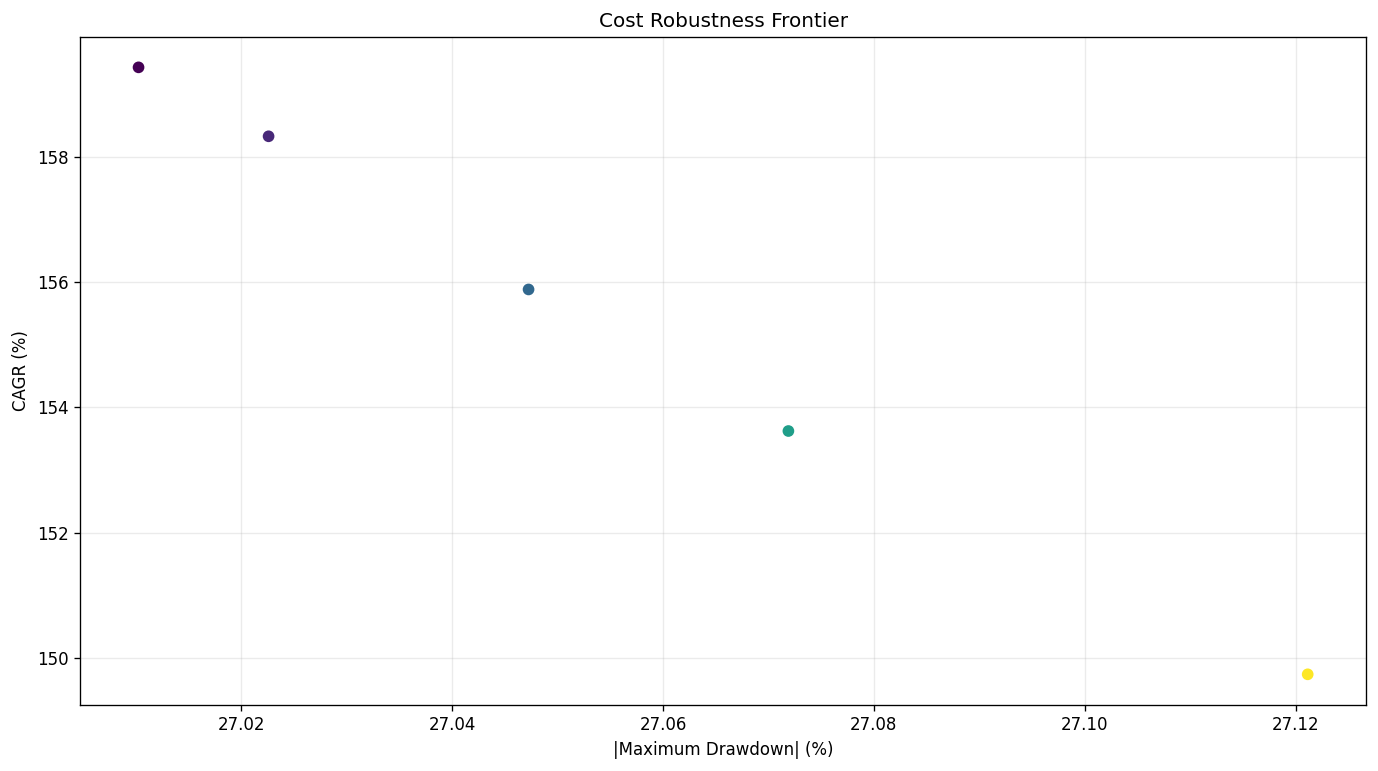
Fees & Slippage Sensitivity
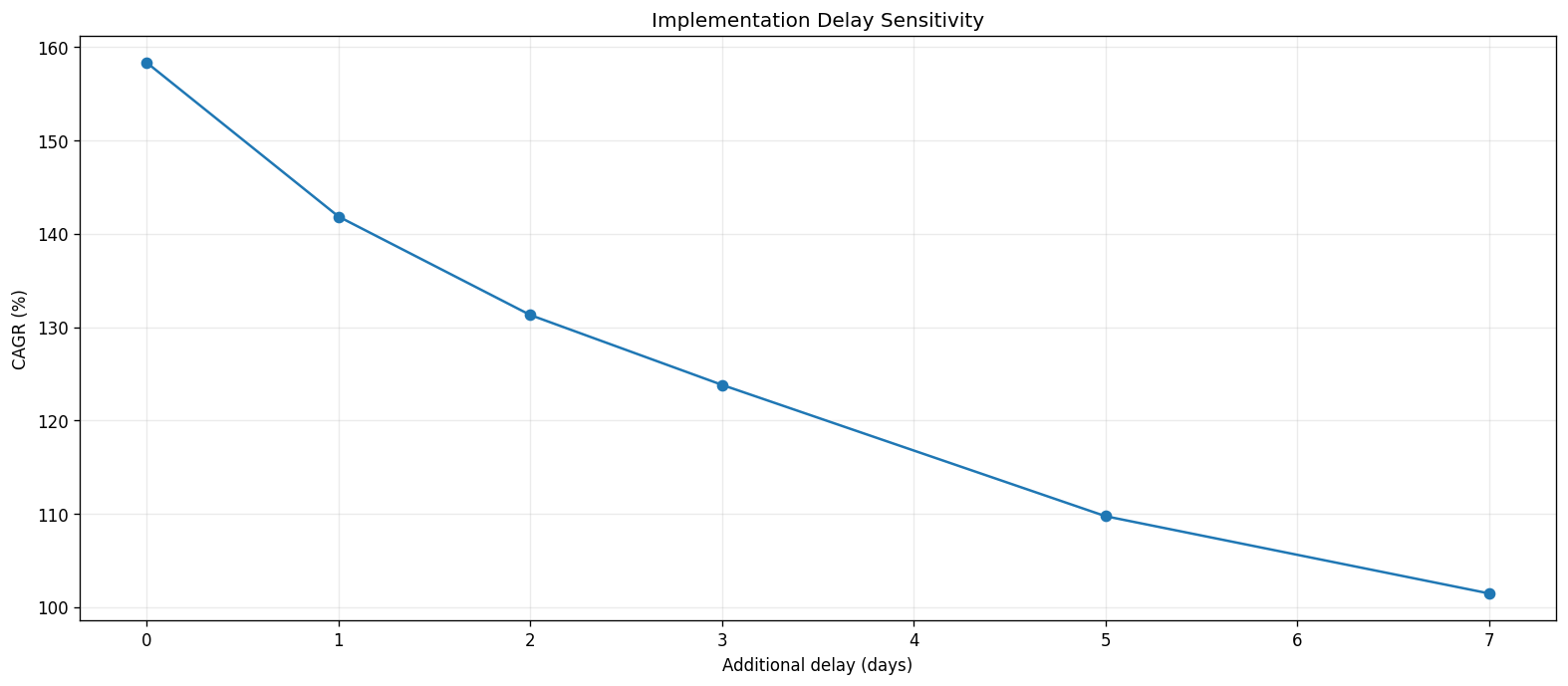
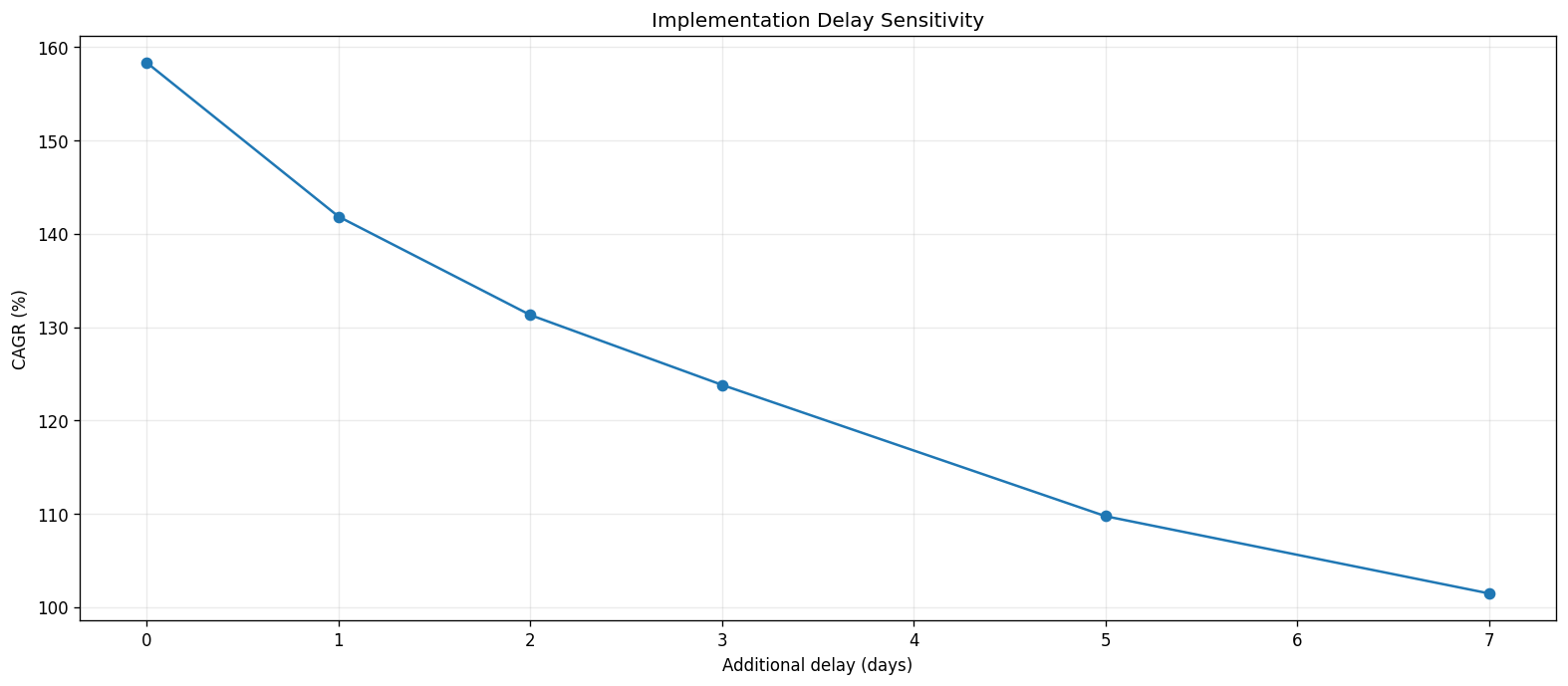
Implementation Scenarios
Strategy / BTC - 1.Cost Robustness Frontier
Cost Sensitivity
Probability of Ruin & Recovery After Shock
Synthetic Stress Scenarios
Stress Comparison vs BTC
| Test family | Result |
|---|---|
| Nearby-parameter sensitivity | 304 of 304 tested neighboring configurations remained above BTC Hold and the strategy remained inside a broad viable region. |
| Independent starts | All tested annual start dates remained positive versus BTC Hold over the available endpoint. |
| Leave-cycle-out | The advantage remained after excluding each major cycle block. |
| Asset failure / unavailability | Anonymized component-removal and modeled disruption scenarios remained within the documented robustness range; component identities and exposure limits are confidential. |
| Order failure / missing signals | Random missed implementation events and retry delays generally preserved the historical edge; extreme repeated failures can materially reduce it. |
| Adverse path clustering | The main structural weakness in this diagnostic is a high concentration of severe adverse moves immediately after portfolio changes; sufficiently extreme clustering can materially reduce the historical edge. |
Operational robustness summary
| Anonymized implementation scenario | CAGR | Max DD | Calmar |
|---|---|---|---|
| Scenario A | 158.33% | -27.02% | 5.86 |
| Scenario B | 139.92% | -29.26% | 4.78 |
| Scenario C | 136.03% | -29.92% | 4.55 |
| Scenario D | 124.93% | -31.42% | 3.98 |
| Scenario E | 110.53% | -31.09% | 3.55 |
| Scenario F | 102.63% | -36.26% | 2.83 |
Operational implementation sensitivity
Execution & Structural Robustness
Robustness & Risk
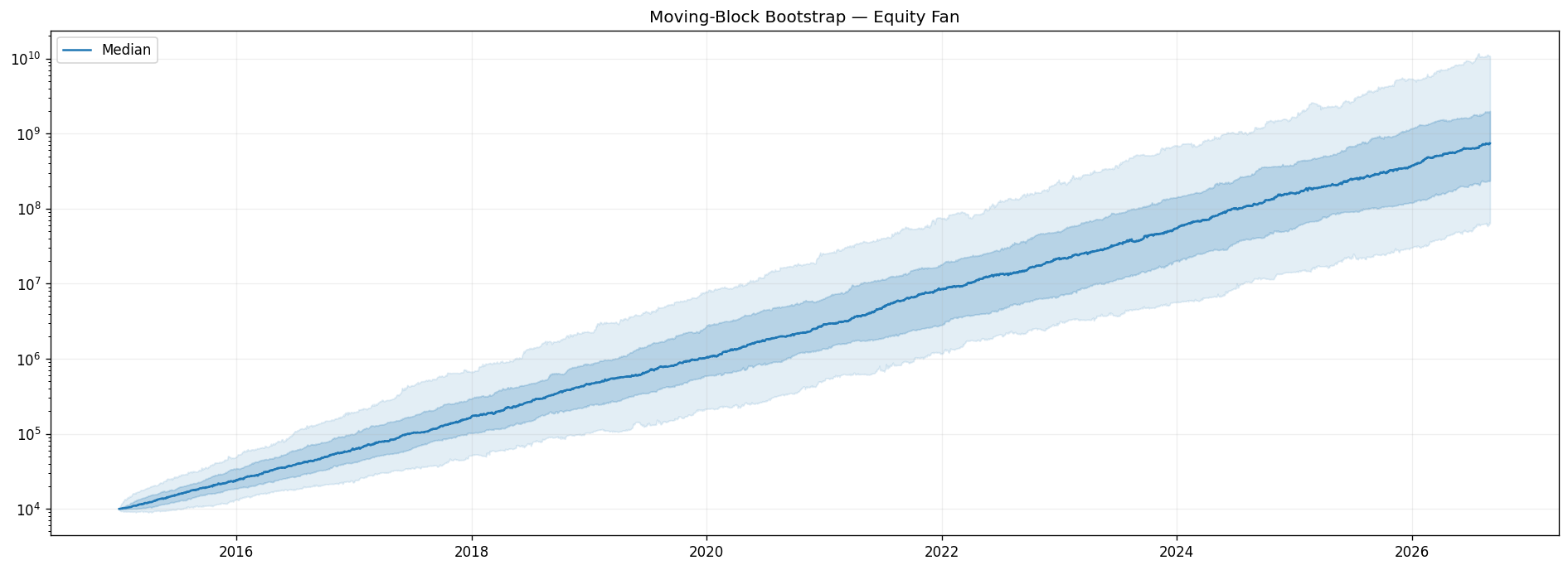
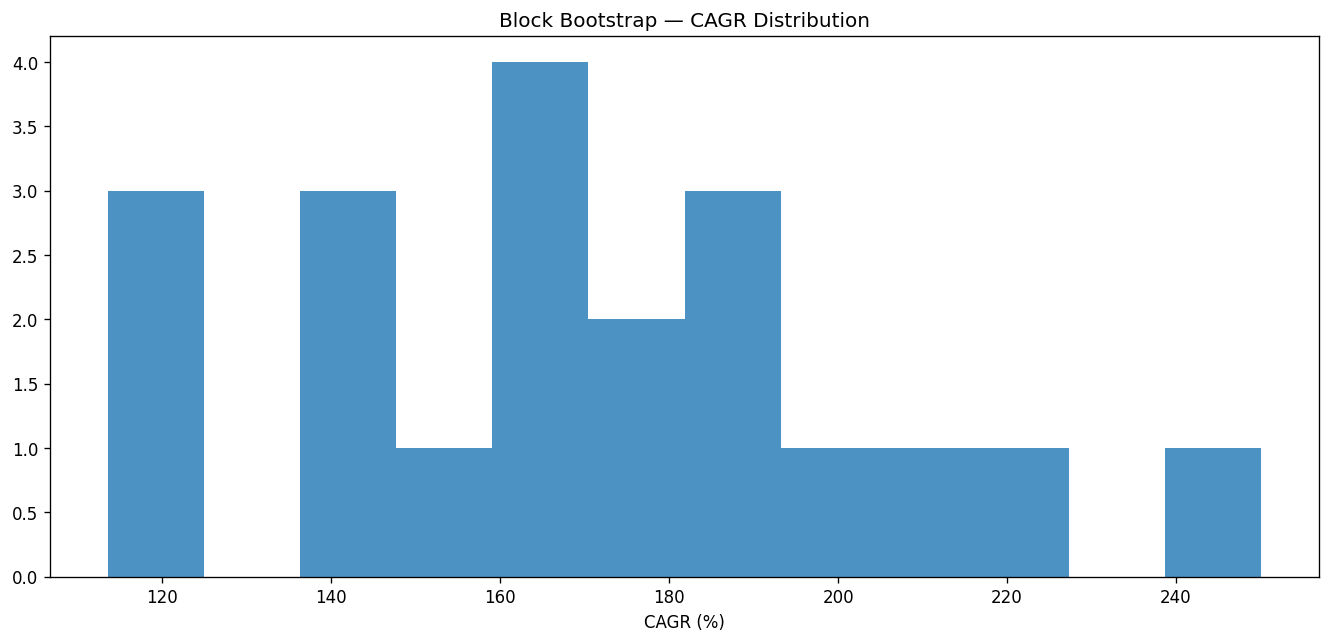
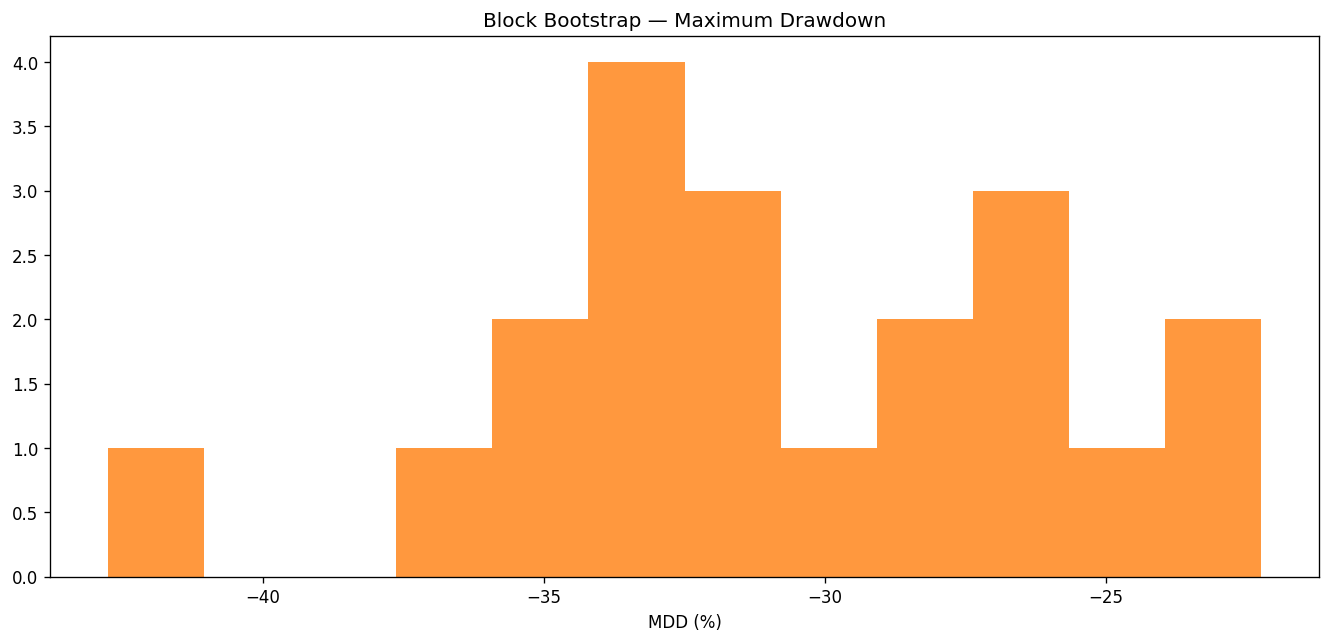
Monte Carlo (Bootstrap)
Regime Analysis (Bull / Bear / Sideways) — Strategy vs BTC
Strategy Profile
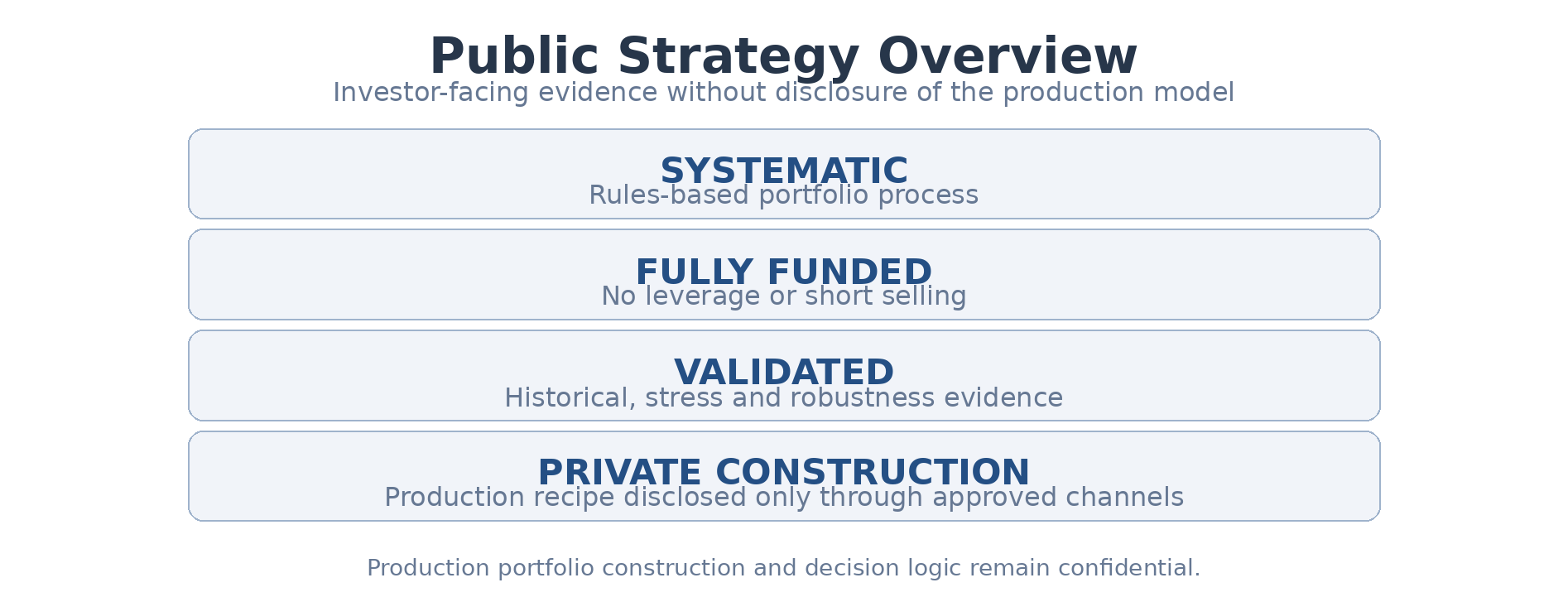
The model is designed as a systematic, rules-based and low-turnover allocation framework rather than a high-frequency trading system.
The strategy has been backtested, stress-tested, audited against the internal engine package, and placed under a defined review protocol so that future parameter changes require evidence rather than discretionary adjustment.
Its objective is to improve long-horizon risk-adjusted outcomes relative to passive Bitcoin exposure through a proprietary systematic portfolio process.
Portfolio changes are systematic and relatively infrequent. The production decision logic is confidential.
The objective is not to maximize trading frequency, but to improve risk-adjusted performance relative to passive Bitcoin exposure through disciplined systematic portfolio management.
The strategy is therefore structurally different from leveraged or high-frequency crypto trading systems.
Capacity & Liquidity Considerations
- Primary implementation: fully funded spot allocation across a private approved instrument set; no leverage or short selling
- Turnover: moderate to low compared to high‑frequency crypto strategies
- Cost modeling: includes fees, slippage, and generic carry stress scenarios
- Capacity expected to scale with market liquidity conditions
Review & Optimization Protocol
Governance objective: preserve the strategy as a systematic, tested and auditable process. The review protocol exists to monitor degradation, execution risk, data quality and structural market changes without turning the model into discretionary or reactive optimization.
Recommendation: this should not be treated as a single automatic optimization every two years. The safer approach is a full biennial research review plus ongoing monitoring. Parameters remain frozen unless the evidence shows a real structural change and a candidate passes robustness gates.
Monthly / quarterly monitoring: rolling performance and risk, data quality, implementation quality, turnover, modeled costs and return concentration.
Every two years: re-run the complete backtest and refresh rolling, stress, Monte Carlo, resampling and implementation-sensitivity studies before considering any model change.
Change gates: any candidate must improve robustness without materially worsening Max DD, Ulcer, worst 1Y/2Y, average drawdown, trade concentration or execution burden. No parameter should be changed only because a new two-year date arrived.
Review decision: keep the strategy logic frozen and use this protocol as surveillance. Research changes require material evidence from data quality, implementation conditions and validated performance diagnostics.